If your car has stalled on the I-440 Beltline at rush hour, blown a tire on Capital Boulevard, or simply won’t start in your own driveway on a humid August morning, you don’t need a lecture – you need a truck. Towing services in Raleigh, NC exist for exactly this moment, and knowing what to expect before you’re stranded makes the whole experience faster and a lot less stressful.
This guide walks through the different types of towing available in Raleigh, what typically drives the cost, the state laws that protect you as a vehicle owner, and what to actually do in the minutes before help arrives. It’s written from the perspective of a local operation that dispatches trucks across Wake County every day – not a generic national directory.
Why Raleigh Drivers Need a Reliable Local Towing Partner
Raleigh’s road network is deceptively demanding. The I-440 Beltline sees heavy, stop-and-go congestion during commute hours, which means breakdowns there create ripple effects fast. I-40 near RDU and the Streets at Southpoint corridor gets a steady mix of airport traffic and long-haul trucks, so a stalled vehicle in the right lane isn’t just inconvenient – it’s a safety hazard. Add in the Research Triangle Park commuter flow along US-1 and Highway 54, and you’ve got a metro area where breakdowns happen in high-traffic, high-speed environments more often than in a sleepier town.
Weather plays a role too. Raleigh summers push batteries and cooling systems to their limits, and calls for overheating engines and dead batteries spike noticeably between June and September. Winter, while milder than much of the country, still brings the occasional ice event that turns a five-minute drive into a multi-car pileup risk.
A tow company that knows these patterns – which exits back up first, where flatbeds can safely stage on the Beltline shoulder, which downtown parking decks have low clearance – gets to you faster and handles the job more safely than an out-of-town dispatcher working off a map app alone.
Types of Towing Services Available in Raleigh
Not every breakdown needs the same solution. Here’s how to match your situation to the right service before you call.
24 Hour Towing in Raleigh
Breakdowns don’t check a clock. A legitimate 24-hour towing service in Raleigh should be answering calls – not routing you to voicemail – at 2 a.m. on a Tuesday just as reliably as at 2 p.m. on a Saturday. This matters most for late-shift workers, RDU travelers on red-eye flights, and anyone driving home after a Raleigh event lets out.
Emergency Towing in Raleigh
This is the category for active hazards: a vehicle stalled in a travel lane, a collision blocking traffic, or a car that’s become unsafe to leave where it sits. Emergency dispatch prioritizes speed and safety over cost estimates – the truck moves first, paperwork follows.
Local Towing Service in Raleigh
Non-urgent situations – a car that won’t start in your garage, a vehicle you need moved to a mechanic on your own schedule – fall under standard local towing. Response windows are more flexible, and you can often schedule a pickup time that works for you rather than needing immediate dispatch.
Flatbed Towing
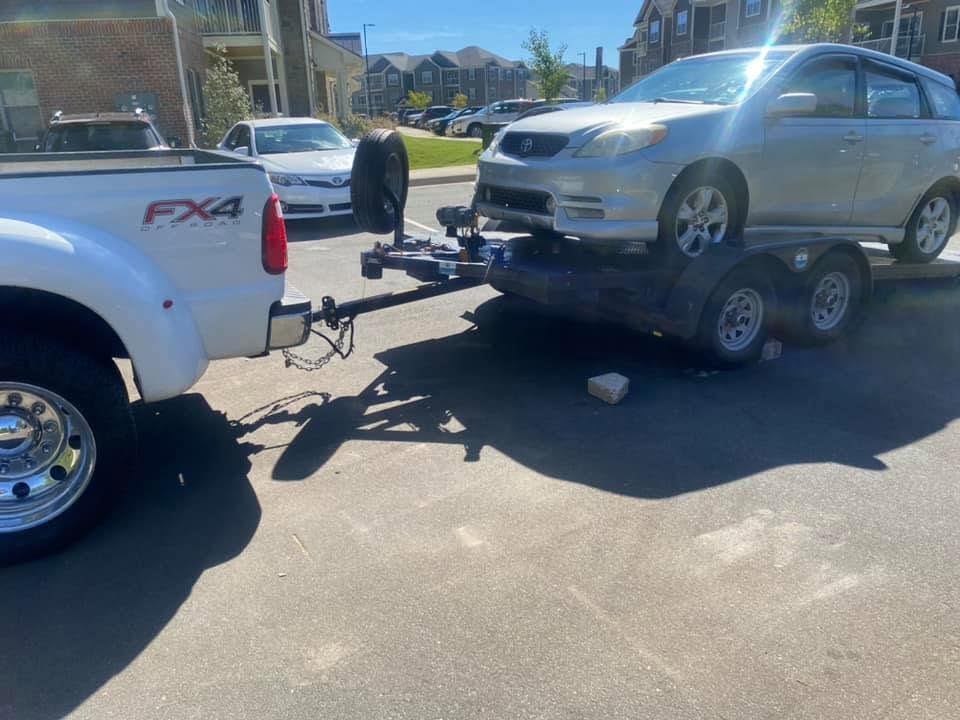
For newer vehicles, all-wheel-drive cars, lowered vehicles, or anything with existing damage, a flatbed is almost always the right call. It lifts the entire vehicle off the ground rather than dragging two wheels, which protects the transmission and undercarriage – an important detail many drivers don’t think to ask about.
Accident Towing
After a collision, towing intersects with insurance, police reports, and sometimes legal follow-up. A company experienced in accident recovery will document vehicle condition before moving it and can coordinate directly with the responding officer, which matters more than people expect until they’re in that situation.
Long Distance Towing
Moving a vehicle out of the Triangle – say, to a dealership in Charlotte or a family member’s driveway three states away – is a different pricing and logistics conversation than a five-mile local tow. Ask specifically about long-distance rates rather than assuming your local quote scales linearly.
Roadside Assistance (Non-Towing)
Sometimes you don’t need a tow at all – a jump-start, a spare tire swap, or a lockout resolves the problem in minutes. Many Raleigh towing companies offer this alongside towing, which can save you both time and money if you call and describe the actual problem rather than just requesting a tow by default.
What Affects Towing Costs in Raleigh, NC
Pricing transparency is one of the biggest gaps in this industry, and it’s a major source of driver frustration. While exact rates vary by company, distance, vehicle type, and time of day, a few factors consistently move the price:
| Factor | How It Affects Cost |
|---|---|
| Distance towed | Most companies charge a base hook-up fee plus a per-mile rate beyond a set radius |
| Time of day | After-hours, weekend, and holiday calls often carry a modest surcharge |
| Vehicle type | Larger trucks, SUVs, and all-wheel-drive vehicles may cost more than a standard sedan |
| Tow method | Flatbed service can run higher than wheel-lift due to equipment and time |
| Accessibility | A car stuck in a ditch, parking deck, or tight space may require specialized recovery, which adds cost |
| Storage | If your vehicle isn’t picked up same-day, storage fees accrue daily |
A reputable Raleigh towing company will quote you a price range over the phone before dispatching, not surprise you at drop-off. If a company won’t give you any number up front, treat that as a red flag.
Under North Carolina rules, towing companies are required to accept multiple payment methods, including cash, credit, and debit – so you shouldn’t be pressured into a cash-only transaction, particularly for a non-consensual tow.
Know Your Rights: North Carolina Towing Laws Every Driver Should Know
This is the section most competing pages skip entirely – and it’s often exactly what someone searches after they’ve already been towed.
- Private lot signage requirements. North Carolina law requires posted signs at private lots warning of towing to be a minimum size and prominently displayed at entrances, including the name and phone number of the contracted towing company. If a lot lacked proper signage, that’s worth raising if you dispute a tow.
- Notification rules for non-consensual tows. When a vehicle is towed at someone else’s request rather than the owner’s, North Carolina law requires the tower to report specific information to local law enforcement before moving the vehicle, or within 30 minutes if the vehicle was actively blocking traffic or endangering public safety.
- Vehicle release conditions. To reclaim a towed vehicle, you’ll generally need to show valid photo ID, prove ownership or permission to retrieve it, and settle the towing and storage fees.
- Storage fee limits. Storage charges can add up daily, but companies are required to provide reasonable access to your vehicle during business hours.
- City-specific rules. Raleigh, along with a few other North Carolina cities, has added local consumer-protection layers on top of state law, covering things like licensing and pricing transparency for towing operators.
If you ever feel a tow was handled improperly – no signage, no notification, cash-only demands with no receipt – you have the right to question it, and contacting local law enforcement or the NC Attorney General’s office is a reasonable next step.
What to Do While You Wait for a Tow Truck
The minutes between calling for help and the truck arriving matter more than most drivers realize.
- Get off the traveled roadway if you can. Even a partial shoulder is safer than a live lane, especially on the Beltline or I-40.
- Turn on hazard lights immediately and keep them on until the truck arrives.
- Stay inside the vehicle with your seatbelt on if you’re stopped on a highway shoulder – exiting into moving traffic is one of the most dangerous parts of a breakdown.
- Set out reflective triangles or flares if you have them and it’s safe to place them.
- Share your exact location – mile marker, exit number, or a dropped pin – when you call, since Raleigh highway signage can be sparse between exits.
- Have your ID, registration, and insurance ready so the driver can confirm ownership and process paperwork quickly on arrival.
How to Choose a Trustworthy Towing Company in Raleigh
With dozens of towing operators serving the Triangle, a few quick checks separate the reliable ones from the risky ones:
- Ask for a price range before dispatch, not just an ETA.
- Confirm licensing and insurance – a legitimate operator will answer this without hesitation.
- Check real response times, not just advertised “24/7” claims – read recent reviews for actual wait-time experiences.
- Verify they cover your specific vehicle type, especially for AWD, lowered, or oversized vehicles.
- Look for local dispatch, not a national call center that subcontracts to whoever’s available – local dispatchers know Raleigh’s roads and traffic patterns.
Towing is one of those services nobody thinks about until they urgently need it. Raleigh’s mix of dense Beltline traffic, RTP commuter corridors, and seasonal weather swings means breakdowns happen for all kinds of reasons – and having a local, transparent, round-the-clock towing service saved in your phone before you need it is one of the simplest ways to turn a stressful moment into a manageable one.
Whether it’s a 2 a.m. dead battery, a fender-bender on I-40, or a car that needs a careful flatbed ride to the shop, knowing what to expect – the service types, the pricing factors, and your rights under North Carolina law – puts you back in control faster.
FAQ
How much does towing cost in Raleigh, NC?
Costs vary based on distance, vehicle type, and time of day, but most local tows include a base hook-up fee plus a per-mile rate. Ask for a price range before the truck is dispatched – reputable companies will give you one over the phone.
Is towing available 24 hours a day in Raleigh?
Yes, most established towing companies in Raleigh operate 24/7, since breakdowns and accidents happen at any hour. Confirm this directly with the company, since advertised “24-hour” service doesn’t always mean fast after-hours response.
What should I do if my car breaks down on I-440 or I-40?
Move to the shoulder if possible, turn on hazard lights, stay inside with your seatbelt on, and call for towing with your exact mile marker or exit number. Avoid standing near live traffic while you wait.
Can a private lot tow my car without warning in North Carolina?
Generally no – North Carolina requires clearly posted, properly sized signage at private lots before a non-consensual tow, and towers must notify law enforcement of certain non-consensual tows within a set timeframe.
What’s the difference between flatbed and wheel-lift towing?
Flatbed towing lifts the entire vehicle off the ground, which is safer for AWD, lowered, or damaged cars. Wheel-lift towing raises just two wheels and is common for standard vehicles needing a shorter, simpler tow.
How do I get my car back after it’s been towed in Raleigh?
You’ll typically need valid photo ID, proof of ownership or permission to retrieve the vehicle, and payment of towing and any accrued storage fees. Companies must accept cash, credit, and debit for these payments.